Choosing the right LED display can be confusing. Many businesses see terms like SMD Screens, LED walls, fine-pitch displays, and standard LED screens. But what do they actually mean? And more importantly, which one is better for your indoor space?
One of the most advanced display solutions today is the Max Series SMD Screen. You will get it only at MNK Digital. This premium LED video wall series is designed for high-quality indoor displays. On the other hand, standard LED screens have been used for years in advertising, events, and digital signage. They still work well for many applications.
So, what is the real difference? Let’s know.
Traditional LED Screens
Let’s start with the basic one.
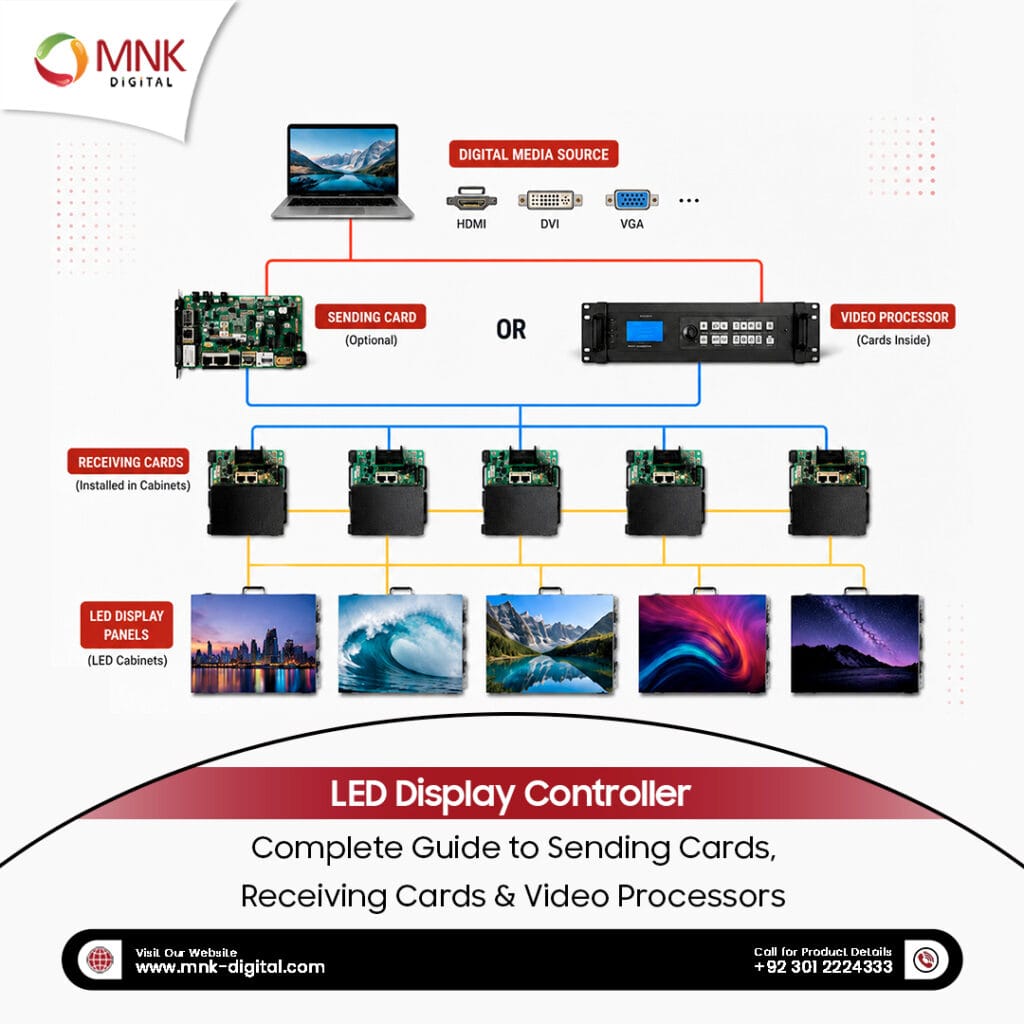
A standard LED screen is a digital display made of many small LED lights. These lights combine to show images, videos, and text. Businesses often use these screens for advertising, promotions, and public displays. These screens are bright and large. They are great for showing content to people from a distance. However, most standard LED screens are designed for general use, not for ultra-high indoor visual quality. That’s where fine-pitch LED technology, like the Max Series, becomes important.
What is the Max Series SMD Screen?
Now let’s answer your question right away.
The Max Series SMD Screen is a fine-pitch indoor LED video wall developed by LianTronics. It is designed for places where visual clarity and premium display quality are important. The Max Series is built for modern indoor environments such as corporate offices, control rooms, retail stores, showrooms, conference halls, and entertainment venues.
Unlike many traditional LED displays, the Max Series focuses on high resolution, clear visuals, and easy installation. The cabinets are designed with a 16:9 aspect ratio, which helps create perfect LED walls for Full HD, 4K, and even 8K resolution displays. This makes the Max Series ideal for businesses that want a professional and cinematic visual experience.
Who Provides Max Series SMD screen in Pakistan?
MNK Digital provides many LianTronics displays in Pakistan. And the Max series is one of them. Being the sole authorized distributor of LianTronics in Pakistan, MNK Digital is the only place to get the authentic Max series at the best pricing range. We offer BIM Max in 4 pixel pitches: 1.6, 1.9, 2.6, and 4. All these pixel pitches are suitable for indoor spaces that require a premium display for more accurate viewing results.
Anyone interested to upgrade their indoor business space should invest in this premium display. To get more info, call us right away, and our team will help you.
Major Differences B/W Standard LED & Max Series
To keep things simple, here are some major differences between a traditional standard LED screen and a premium Max series indoor SMD screen.
Pixel Pitch
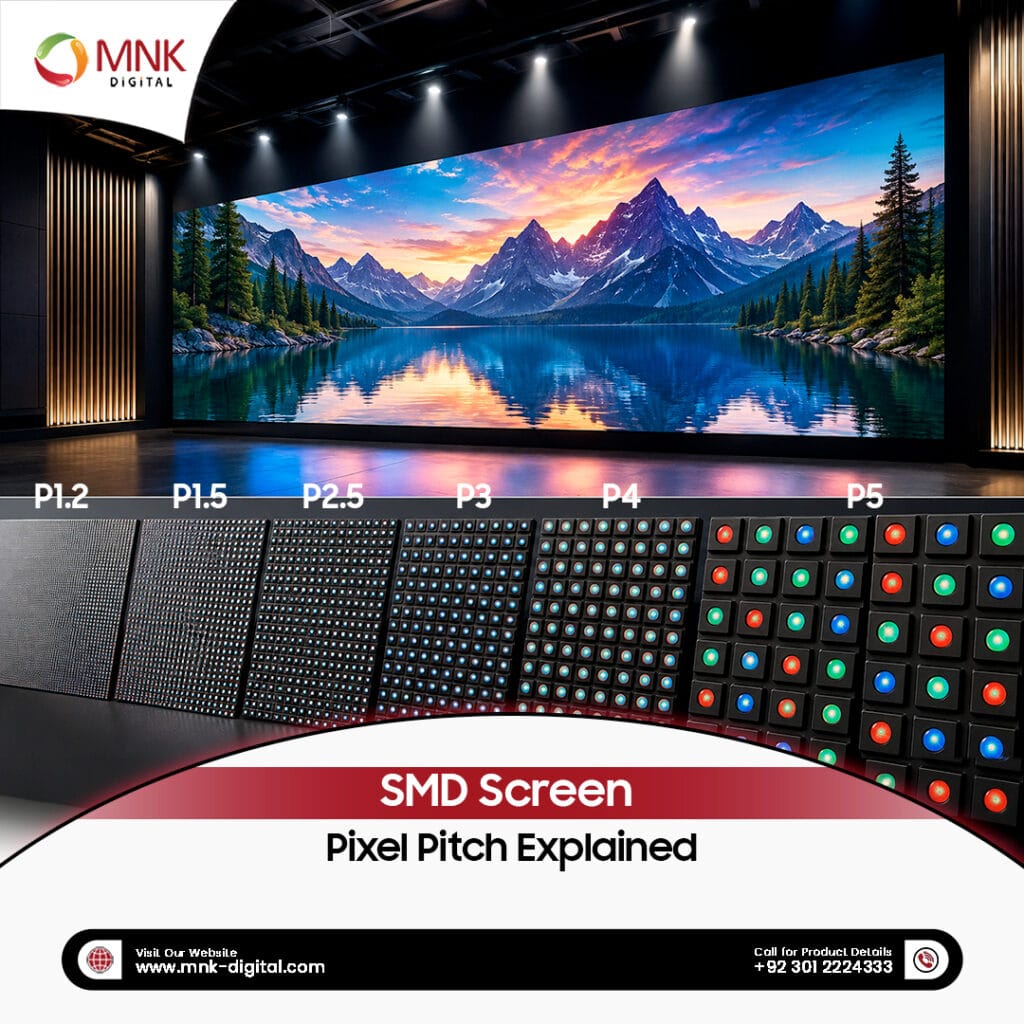
One of the biggest differences between Max Series screens and standard LED screens is pixel pitch. As discussed above, the Max Series offers fine pixel pitch options, including 1.6 mm, 1.9 mm, 2.6 mm, and 4 mm. These small pixel pitches allow the screen to produce very clear and detailed visuals, even when people stand close to the display.
Standard LED screens usually have larger pixel pitches, often used for outdoor displays. These work well when people watch from far away, but the picture may not look as sharp at close distance. This is why the Max Series is better for indoor environments, where viewers are closer to the screen.
Panel Design and Build Quality
Another area where the Max Series shines is panel design. Each Max Series cabinet measures: 1024 mm × 576 mm × 44.5 mm. This size follows the 16:9 ratio, which matches the format of most modern video content. Standard LED panels often come in different shapes that may not perfectly match video formats. This can sometimes create scaling issues or visible panel gaps. The Max Series is designed to build perfectly aligned video walls. This ensures the display looks clean, professional, and seamless.
Display Resolution and Visual Quality
Another important difference is displaying resolution. The Max Series is designed to build LED video walls that support FHD, 4K, and even 8K resolutions. This is possible because of its 16:9 cabinet design. This design allows panels to connect perfectly without distortion. The result is a smooth and seamless video wall.
Each Max Series panel has different resolutions depending on the model:
- BIM MAX 1.6 – 640 × 360 pixels
- BIM MAX 1.9 – 520 × 290 pixels
- BIM MAX 2.6 – 384 × 216 pixels
- BIM MAX 4 – 256 × 144 pixels
These panels combine to create large, high-resolution displays. Standard LED screens can also display video content, but they usually focus on large size rather than ultra-high detail. If visual quality is your top priority, the Max Series clearly stands ahead.
Weight and Installation
Installation is another important factor when choosing LED displays. The Max Series panels are made from die-casting aluminum, which keeps them strong but lightweight. Each panel weighs only 11.6 kg. This lightweight design makes installation much easier and faster. Large cabinet sizes also reduce the number of panels needed. This helps complete projects more quickly and efficiently.
Intelligent Module Technology
The Max Series also includes optional intelligent modules. These modules store calibration data inside the system. If a module is replaced, the system can automatically retrieve the calibration settings. This helps maintain consistent brightness and color without manual adjustments. Standard LED screens often require manual recalibration after module replacement.
Brightness and Viewing Angle
The Max Series delivers brightness levels between 700 and 900 nits. This level is ideal for indoor environments. The display also provides wide viewing angles of 160 degrees. This means people can see the screen clearly from different positions in the room. Standard LED screens also offer good brightness, especially outdoor models. However, they are usually designed for visibility in sunlight, not indoor visual precision.
Heat Management and Reliability
The Max Series includes efficient heat dissipation technology. This helps the screen stay stable and reliable over time. Standard LED screens also include cooling systems, but the Max Series focuses specifically on indoor stability and reliability.
Flexible Installation and Splicing
Another advantage of the Max Series is flexibility. The system supports universal modules that can work with the BIM Pro Series. This allows mixed splicing configurations, which means different modules can be combined to create custom display layouts. Standard LED screens often have more limited configuration options.
Maintenance
Maintenance is another key difference. The Max Series supports front access servicing. This means technicians can maintain or replace modules from the front side of the display. On the other hand, standard LED screens sometimes require rear access, which means extra space behind the screen for maintenance.
Conclusion
Both Max Series SMD screens and standard LED screens have their place in the display industry. Standard LED screens are great for large outdoor advertising and general display purposes. However, when it comes to indoor visual quality, seamless design, and advanced features, the Max Series stands out.
With fine pixel pitch options, lightweight cabinets, front access servicing, and support for FHD, 4K, and 8K video walls, the Max Series offers a powerful solution for modern indoor displays. For businesses that want to create high-impact visual experiences, the Max Series SMD screen is a smart and future-ready choice.
FAQs:
What is the difference between SMD screens and LED screens?
SMD screens are a type of LED display where the LED chips are mounted directly onto the surface. They provide better viewing angles and higher resolution compared to traditional LED displays.
Which LED screen is best for indoor use?
Fine-pitch SMD screens like the Max Series are best for indoor environments because they provide higher resolution and clearer visuals at close viewing distances.
What pixel pitch is best for indoor LED video walls?
Pixel pitches between 1.6mm and 2.6mm are usually ideal for indoor LED video walls where viewers stand close to the display.