What Is MPRT?
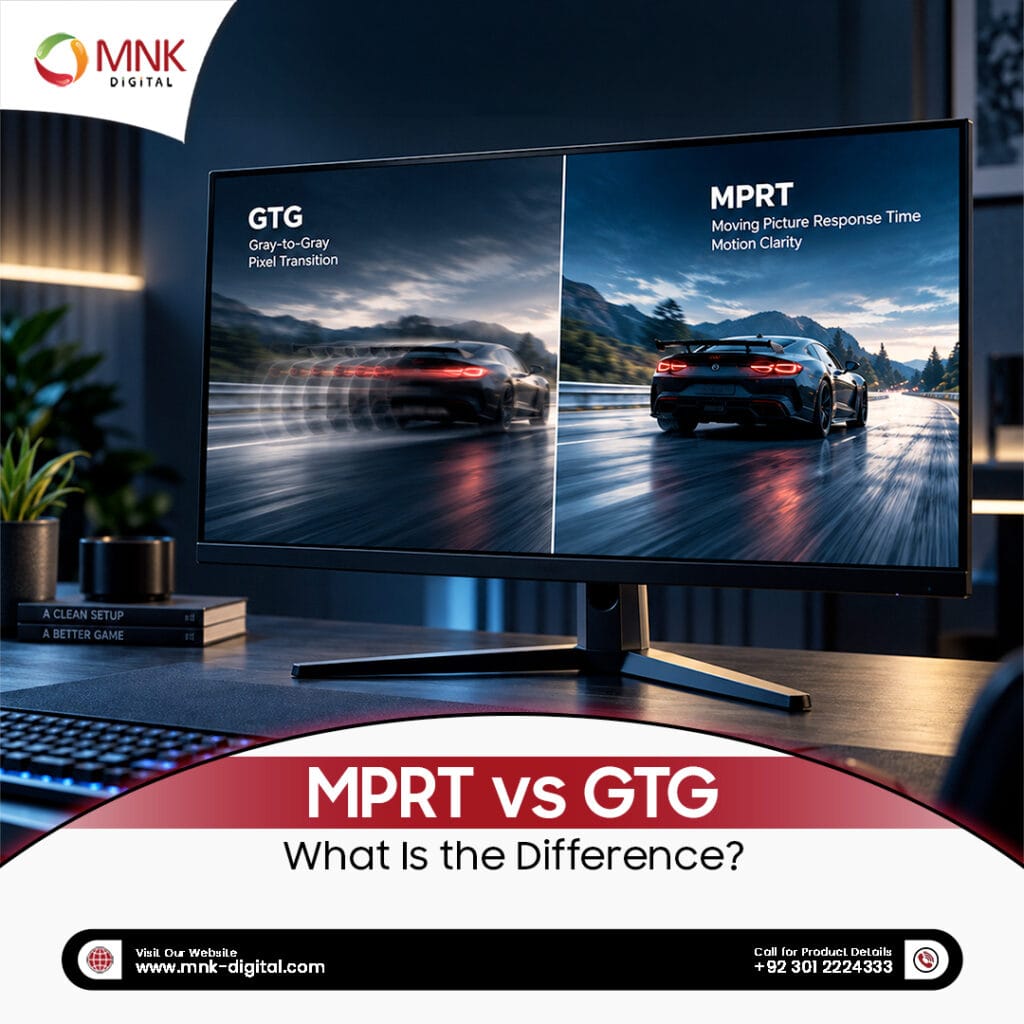
MPRT stands for Moving Picture Response Time. It is a measurement associated with how long an image or pixel remains visibly present while an object is moving on the screen. This is important because motion blur is not caused only by slow pixel transitions. The way a display presents each frame can also affect how much blur the human eye perceives during movement. For example, a traditional 60Hz display refreshes approximately every 16.67 milliseconds. A 120Hz display refreshes approximately every 8.33 milliseconds, while a 240Hz display refreshes approximately every 4.17 milliseconds.
Some monitors also use technologies such as backlight strobing or motion-blur reduction to reduce the time an image is visibly presented. These technologies can help improve motion clarity and can be associated with very low MPRT figures. However, an advertised MPRT number should not be treated as a complete measurement of a monitor’s overall response performance. Other factors, including refresh rate, pixel transitions, overdrive, and the specific testing method, also matter.
What Is GTG?
GTG stands for Gray-to-Gray. It describes the time a display pixel takes to transition from one shade of gray to another. Modern monitors constantly change their pixels as images move and update. If those pixels cannot change quickly enough, you may notice visible trails behind moving objects. This effect is commonly known as ghosting or smearing. A monitor advertised with a 1ms GTG response time is reporting a very fast gray-to-gray pixel transition under the manufacturer’s specified testing conditions.
There is an important detail, though: pixels do not necessarily transition between every color at exactly the same speed. Some transitions may be faster than others. This means that a single advertised GTG figure does not tell you everything about the monitor’s real-world motion performance.
Also Read: How is Monitor Response Time Measured? GTG vs MPRT
MPRT vs GTG: What Is the Difference?
The easiest way to understand the difference is to look at what each measurement is trying to describe.
| Feature | GTG | MPRT |
|---|---|---|
| Full form | Gray-to-Gray | Moving Picture Response Time |
| Main focus | Pixel transition speed | Motion visibility and persistence |
| Related to | Ghosting and pixel transitions | Perceived motion blur |
| Commonly important for | Fast-moving content and gaming | Motion clarity and blur reduction |
| Can be affected by | Pixel response characteristics and overdrive | Refresh rate and motion-reduction technologies |
In simple terms:
GTG asks how quickly a pixel can change. MPRT relates to how long an image remains visibly present during motion. Because they measure different things, a 1ms MPRT monitor should not automatically be considered equivalent to a 1ms GTG monitor.
MPRT vs GTG for Gaming
For gaming, both MPRT and GTG can be relevant because fast-moving games place greater demands on a display. Consider a competitive game where an opponent quickly moves across your screen. If the monitor has slow pixel transitions, you may see trailing behind the moving object. Fast and well-controlled pixel transitions can help reduce this type of ghosting. MPRT becomes particularly relevant when a monitor offers a motion-blur-reduction feature. Technologies such as backlight strobing can reduce perceived motion blur by controlling how long the image is visible to your eyes.
However, there is no single specification that determines whether a monitor will provide excellent gaming motion. You should also consider:
- Refresh rate
- Actual pixel response performance
- Overdrive settings
- Ghosting
- Overshoot
- Motion-blur-reduction features
- Variable refresh rate support
- Your computer’s actual frame rate
A monitor with a high refresh rate and well-controlled pixel response can provide a much better experience than one chosen only because its specification sheet contains a low response-time number.
1ms MPRT vs 1ms GTG
1ms MPRT and 1ms GTG are not the same measurement.
A monitor advertised as 1ms MPRT may achieve that figure using a motion-blur-reduction or backlight-strobing mode. Its actual pixel transitions may have different GTG values. Similarly, a monitor advertised as 1ms GTG is describing a pixel transition measurement rather than directly describing how long an image remains visible during motion. This is why comparing two monitors based only on the “1ms” label can be misleading. If you are comparing displays, look at the complete specifications and, where possible, independent testing. The actual behavior of a monitor can be more useful than one number printed on the product page.
Monitor Response Time Explained
Monitor response time generally refers to how quickly a display can change its pixel state. However, the term can be confusing because manufacturers may use different measurements and testing conditions. GTG is one common way of describing pixel response. MPRT is another specification that is closely associated with motion clarity and image persistence. This means that when you see a monitor advertised as having a “1ms response time,” you should check what that number actually represents.
Is it:
- 1ms GTG?
- 1ms MPRT?
- A measurement achieved only with a particular performance mode?
- A manufacturer’s best-case transition rather than typical performance?
Knowing the answer makes it easier to compare monitors accurately.
What Does 4ms GTG Mean?
4ms GTG means that the monitor is reporting a gray-to-gray pixel transition time of 4 milliseconds under its stated testing conditions. Four milliseconds is still a relatively short amount of time, but the number alone does not tell you exactly how the monitor will perform across every color transition. For everyday office work, browsing, documents, and general use, a 4ms GTG specification may be perfectly adequate. For competitive gaming, however, you may want to look beyond the advertised number and check independent measurements of ghosting, overshoot, and actual response performance at the refresh rate you plan to use.
In other words, 4ms GTG does not automatically mean a monitor will have noticeable blur, nor does it guarantee perfect motion clarity. The complete display design matters.
What Does 1ms MPRT Mean?
1ms MPRT indicates that the monitor is reporting a 1-millisecond Moving Picture Response Time under its specified testing conditions. On many gaming monitors, a very low MPRT figure is associated with a motion-blur-reduction mode. This type of feature can improve the clarity of fast-moving objects by reducing image persistence. However, enabling an MPRT or motion-blur-reduction mode can involve trade-offs. Depending on the monitor, it may affect brightness, introduce flicker, or limit the use of other features such as variable refresh rate.
Therefore, 1ms MPRT does not mean the monitor has 1ms GTG pixel response. They are separate measurements.
How Refresh Rate Affects Motion Clarity
Refresh rate is measured in hertz (Hz) and tells you how many times a monitor can refresh its image each second.
For example:
- 60Hz: approximately 16.67ms per refresh
- 120Hz: approximately 8.33ms per refresh
- 144Hz: approximately 6.94ms per refresh
- 240Hz: approximately 4.17ms per refresh
- 360Hz: approximately 2.78ms per refresh
A higher refresh rate can make motion appear smoother when your computer can produce enough frames to take advantage of it. However, refresh rate and pixel response work together. A high-refresh-rate monitor with slow pixel transitions can still show ghosting because pixels may not change quickly enough to keep up with the display’s refresh cycle.
What Is Ghosting and Why Does It Matter?
Ghosting occurs when remnants of a previous image remain visible as an object moves across the screen. For example, imagine a bright object moving quickly against a dark background. If the pixels cannot transition quickly enough, you may notice a faint trail following the object. GTG performance is particularly relevant when considering this type of pixel-transition behavior. Many monitors use overdrive to accelerate pixel transitions. However, setting overdrive too aggressively can create overshoot, which may appear as bright or dark artifacts around moving objects. For this reason, the fastest response-time setting is not always the best setting. A balanced setting that provides fast transitions without excessive overshoot can produce better real-world results.
Which Response Time Should You Choose?
The right specification depends on what you use your monitor for.
For competitive gaming: Look for a combination of high refresh rate, fast pixel response, low ghosting, controlled overshoot, and good motion clarity.
For casual gaming: A good-quality 120Hz, 144Hz, or higher-refresh-rate display with decent response performance can provide a smooth experience without requiring you to chase the lowest advertised number.
For office and business use: Response time is usually less important than screen size, resolution, brightness, ergonomics, connectivity, and viewing comfort.
For video and fast-moving content: Refresh rate, pixel response, and motion clarity can all contribute to a cleaner viewing experience.
Final Thoughts: MPRT vs GTG
MPRT and GTG are different measurements, and neither should be considered a complete measure of monitor quality on its own. GTG focuses on pixel transitions between shades, making it useful when evaluating potential ghosting and pixel response behavior. MPRT is more closely associated with image persistence and perceived motion blur. If you are comparing a 1ms MPRT monitor with a 1ms GTG monitor, do not assume they offer identical performance. The numbers describe different things.
The same principle applies to 4ms GTG. A 4ms specification does not tell you everything about how a monitor will look during fast movement. For the best comparison, consider the monitor’s refresh rate, GTG response performance, MPRT or persistence, overdrive behavior, motion-blur-reduction features, ghosting, and independent test results. Ultimately, the best monitor is not necessarily the one with the smallest response-time number. It is the one whose overall performance matches the way you actually use your display.
Need Help Choosing the Right Display?
If you are comparing monitors or professional display solutions and are unsure which specifications matter for your requirements, MNK Digital can help you understand the available options and choose a display based on your intended use, performance requirements, and budget. We provides professional display solutions for businesses, organizations, retail environments, educational institutions, and other applications. For more information about display solutions, contact us.